

Tokushima University is a Place Where You Will Be Challenged Academically And Supported Personally.
Profile
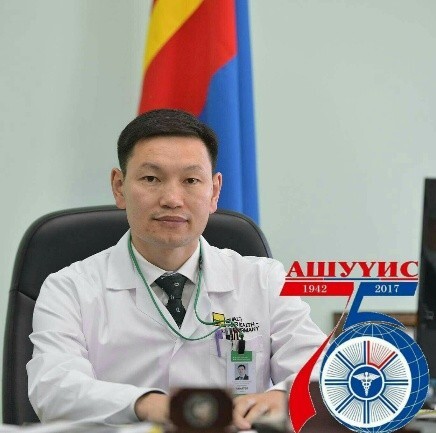
- Name:
- Dr. Battur Lkhagva, M.D., Ph.D.
- Country:
- Mongolia
- Department:
- The Department of Respiratory Medicine and Rheumatology; January, 2005 – April, 2008
- Current occupation:
- Director General of the National Center for Public Health, Mongolia
Why Tokushima University?
I learned about Tokushima University through colleagues who praised its strong reputation in medical research. Having just completed my master’s in allergy and asthma, I was drawn to its focus on internal medicine and molecular therapeutics.
How did you prepare for the entrance exam to Tokushima University?
It was a major challenge as I studied English and Japanese at the same time in 2005. The English language was my first a foreign language. I prepared by reviewing medical sciences, practicing past exams, and seeking guidance from mentors.
What kind of research did you do while you were enrolled at Tokushima University? Could you please share any difficulties you faced in your research? Also, when you had difficulties, how did you overcome them?
My research at Tokushima University focused on the immunomodulatory effects of bestatin, an aminopeptidase inhibitor, on cytokine production in human monocytes and alveolar macrophages. I demonstrated that bestatin suppressed pro-inflammatory cytokines such as IL 6, CXCL8/IL 8, and CCL3/MIP 1α, while enhancing the anti-inflammatory cytokine IL 10, suggesting its potential as an anti-inflammatory agent.
I was fortunate to be guided by then-Professor Sone Saburo and then-Associate Professor Tani Kenji, whose mentorship was invaluable. The greatest difficulty I faced was mastering advanced laboratory techniques and ensuring reproducibility of results. Many early experiments failed, which was discouraging. However, through persistence, careful review of protocols, and close teamwork with colleagues — supported by my supervisors’ encouragement — I overcame these challenges.
Please tell us about your memories of Tokushima and Tokushima University during your stay.
I fondly recall the Awa Odori festival, hiking the Mount Bizan, playing basketball with the Nazuna team, and badminton with the international group. My first sashimi tasting was also unforgettable. These experiences enriched my life beyond academics.
What was your impression of Tokushima and Japan?
Tokushima impressed me with its natural beauty and calm atmosphere. Japan’s blend of tradition and innovation, respect, and hospitality left a lasting influence on my worldview.
To the extent that you don't mind, could you please share with us the details of your current job?
As Director General of the National Center for Public Health in Mongolia, I oversee national programs on disease prevention, health promotion, and public health policy. My role involves coordinating research, guiding public health strategies, and ensuring effective preparedness and responses to public health emergency. It is a responsibility that requires both scientific knowledge and leadership, and I often draw upon the lessons I learned during my time in Japan.
Please give a message to those who will be enrolling at Tokushima University and those who are considering enrolling.
Tokushima University is a place where you will be challenged academically and supported personally. To future students, I encourage you to embrace the opportunities, even when they feel it is difficult. The friendships you build, the research you conduct, and the cultural experiences you gain will stay with you for life. Tokushima will not only shape your career but also enrich your character.
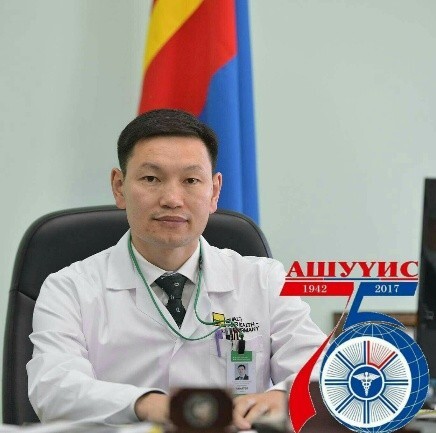
Dr. Battur Lkhagva, M.D., Ph.D.
Director General of the National Center for Public Health, Mongolia
