│Return to list│Previous page│Next page│
| <L-08>:Life Science, Pharmaceutical Sciences |  |
Development of Novel Drug Discovery Technologies Based on the Epitranscriptome
― Elucidation of New Homeostatic Mechanisms of Methylated RNA through Comprehensive Analyses and Exploration of Novel Drug Discovery Seeds ―
| Nazere Keyoumu Assistant Professor Yuki Kuwano Associate Professor Hiroyuki Morino Professor |
|
| Medical Genetics, Physiological Science, Medical Science, Graduate School of Biomedical Sciences | |
| Keywords | Methylated RNA, m6A-modified RNA, epitranscriptome, drug discovery |
| Laboratory URL | https://www.tokushima-u.ac.jp/med/culture/med/seitaiseigyo/medicalgenetics/ |
| Research Overview | ||
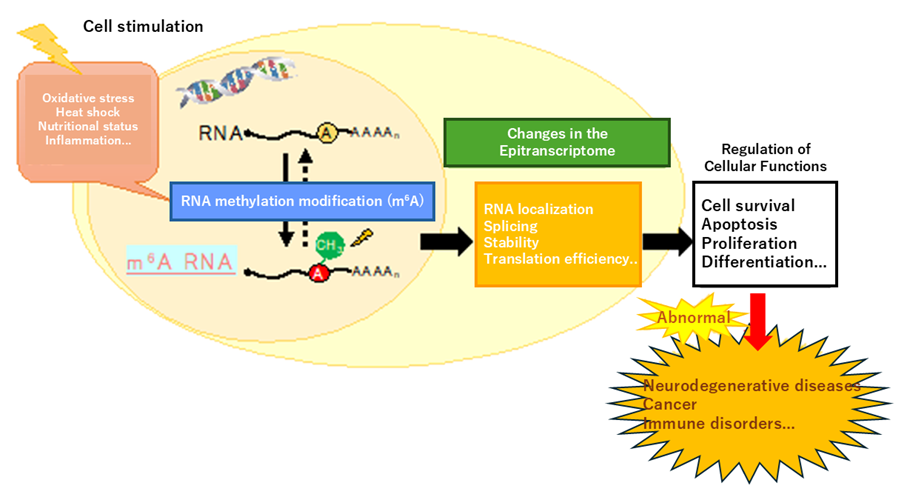
| ● The Urgent Need for More Effective Therapies for Neurodegenerative Diseases and Cancer Advances in molecular targeted therapies have significantly improved cancer treatment; nevertheless, many cancers still lack effective therapeutic options. In particular, as the incidence of neurodegenerative diseases and cancers rises alongside an aging population, there is an urgent need to elucidate their pathogenic mechanisms and establish effective treatments. ● An Approach Using Comprehensive Methylated RNA Analysis: Epitranscriptome Analysis In recent years, post-transcriptional RNA modifications gained significant attention. Epitranscriptome analysis—the comprehensive profiling of methylated RNA—is now essential for elucidating mechanisms of homeostasis. Accumulating evidence suggests that methylated RNAs play critical roles in the pathogenesis of neurodegenerative diseases and cancer. We are investigating the molecular dynamics of methylated RNA to explore novel therapeutic approaches for neurodegenerative diseases and cancer. |
||
| Potential Applications and Commercialization Prospects | ||
|
● Developing Novel Therapeutic Strategies through Functional Analysis of Methylated RNA
|
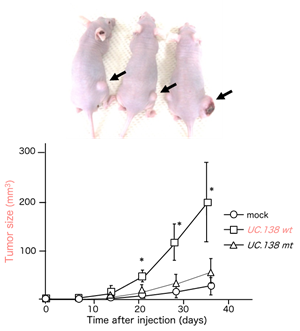
| Publications | ● Kuwano Y, Nishida K, Rokutan K. Overexpression of the transcribed ultraconserved region Uc.138 accelerates colon cancer progression. Sci Rep. 2021 Apr 21;11(1):8667. doi: 10.1038/s41598-021-88123-9. |
Last updated date:October 15, 2026
| Simple Inquiry | Technical consultation | Academic guidance system | Joint research/commissioned research |